
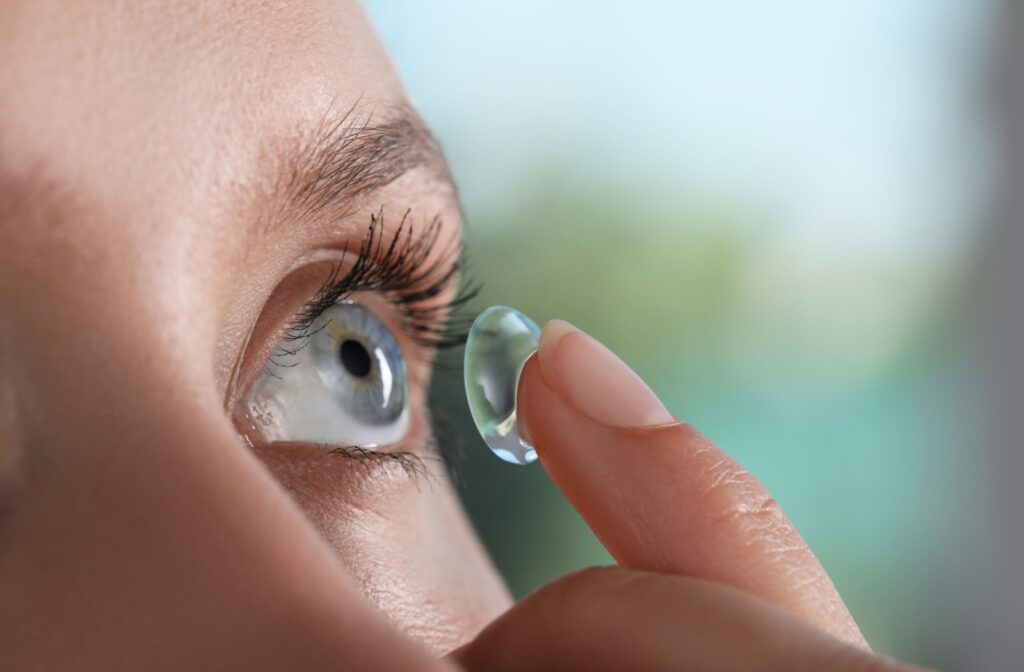
If you have dry eyes, you know that wearing contact lenses can sometimes feel uncomfortable. The irritation, redness, and gritty sensation can make daily activities a challenge. The good news is that you don’t have to give up on contacts entirely.
Certain types of contact lenses are designed with materials and technologies that help your eyes stay moist and comfortable. An eye exam can help determine which features are a good fit for your specific needs. Let’s explore some of these options and how they can make a difference for you.
What to Know About Dry Eyes & Contacts
Dry eye happens when your tears don’t provide enough lubrication for your eyes. This common condition can lead to a scratchy feeling or stinging sensation. Some contact lenses can absorb moisture from your eyes, making your eyes drier.
You may notice more pronounced signs of dry eye when wearing your contacts. Common symptoms include:
- A scratchy or gritty sensation
- Redness or irritation
- Periods of blurry vision
- Sensitivity to light
Contact Lens Features That Can Help
Not all contact lenses are made the same. Some have features that make them a better choice for people who experience dryness. Your eye doctor can suggest options that meet your needs.
Lens Materials & Water Content
Modern contact lenses come in different materials, some of which are more helpful for dry eyes than others. For instance, silicone hydrogel lenses allow more oxygen to reach the front of your eye, making them a popular choice. You might also consider lenses with a lower water content, as this makes them less likely to draw moisture away from your tear film.
Daily Disposable Lenses
A fresh pair of lenses every day reduces the chance for protein deposits to build up on the surface. These deposits can irritate your eyes and make dryness feel worse. Daily disposables offer a clean, smooth surface each morning, which can improve your overall comfort.
Moisture Technology in Lenses
Some contact lens brands incorporate special wetting agents right into the lens material. This technology releases moisture throughout the day to help the lens stay hydrated on your eye. This can lead to a more comfortable wearing experience from morning to night.
Types of Lenses for Dry Eyes
An eye care professional can help you navigate the different types of lenses available. Based on a thorough eye exam, they can suggest a lens that suits your eyes and your lifestyle. A proper contact lens fitting is key to finding a comfortable solution.
Silicone Hydrogel Lenses
Silicone hydrogel lenses are especially breathable, which is a big plus for eye health. Their high oxygen permeability can improve comfort, especially for those with dry eye symptoms. This helps your eyes feel less tired and irritated over the course of the day.
Daily vs. Monthly Lenses
Many people find daily disposable lenses more comfortable than options you wear for two weeks or a month. With no need for cleaning solutions—and less time for irritants to accumulate—dailies can be a great choice for sensitive or dry eyes. This can simplify your routine while also helping your eyes feel better.
Scleral Lenses
For individuals with more persistent dry eye, scleral lenses are another option. These are larger-diameter lenses that rest on the white part of your eye, known as the sclera, and vault over the cornea. The space between the lens and the cornea holds a reservoir of preservative-free saline, keeping the front of your eye moist all day.
Lifestyle Tips for Contact Lens Comfort
Beyond choosing a specific type of lens, a few simple habits can make a big difference in how your eyes feel. Small changes to your daily routine can help reduce irritation and keep your eyes hydrated.
Practice Good Lens Habits
Always follow the wear schedule prescribed by your eye doctor. If you wear monthly or bi-weekly lenses, it’s important to clean and store them as instructed. Never sleep in your lenses unless your eye doctor approves them for overnight wear.
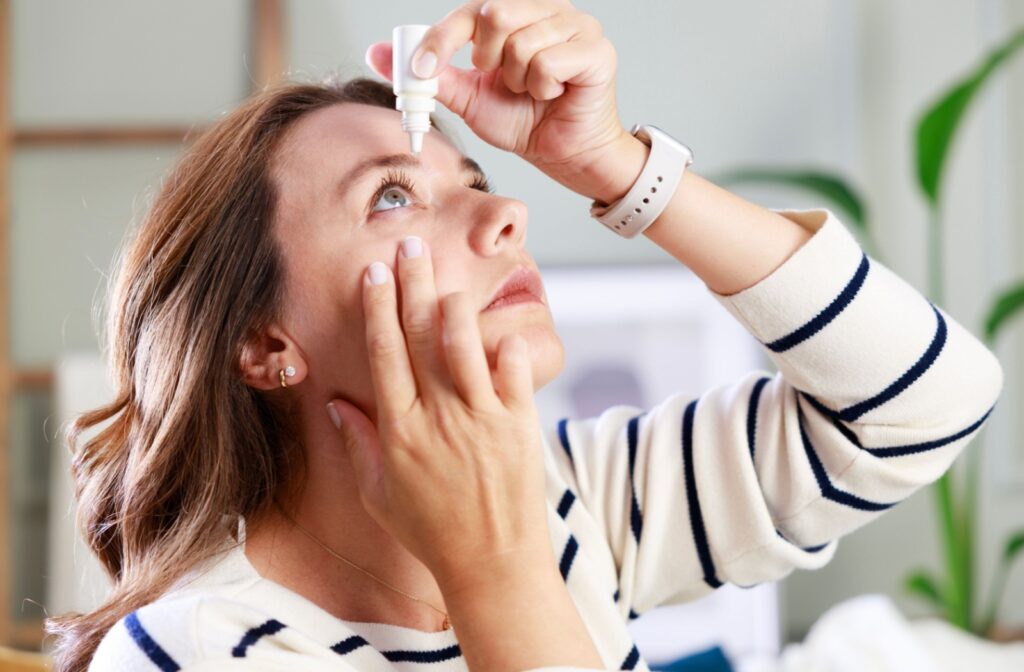
Use Rewetting Drops
Keep a bottle of contact lens-safe rewetting drops with you. A few drops can provide quick relief when your eyes start to feel dry or tired. It’s important to use drops that are formulated for use with contact lenses, as other types may not be compatible.
Take Breaks & Limit Screen Time
Give your eyes a rest by wearing your glasses for a few hours each day if you can. When using digital screens, remember the 20-20-20 rule—every 20 minutes, look at something 20 feet away for at least 20 seconds. This simple habit reduces eye strain and encourages you to blink more often, which helps re-moisten your eyes.
How an Eye Doctor Helps You Choose
Finding the right contact lenses for dry eyes isn’t a one-size-fits-all process. An eye exam is the first step to determine what might be causing your dryness. A professional fitting also makes sure that the lens fits your eye’s unique shape and meets your vision needs.
During a consultation, your optometrist can provide lens samples so you can try them before committing to a full supply. As your eye doctor in Missouri City, we can assess your tear film and overall eye health to recommend suitable options. This personalized approach is key to finding lasting comfort. At Advanced Family Eye Care, our team is here to help you achieve that. Schedule an appointment with us to explore contact lens options for dry eyes and get back to enjoying comfortable contacts.